
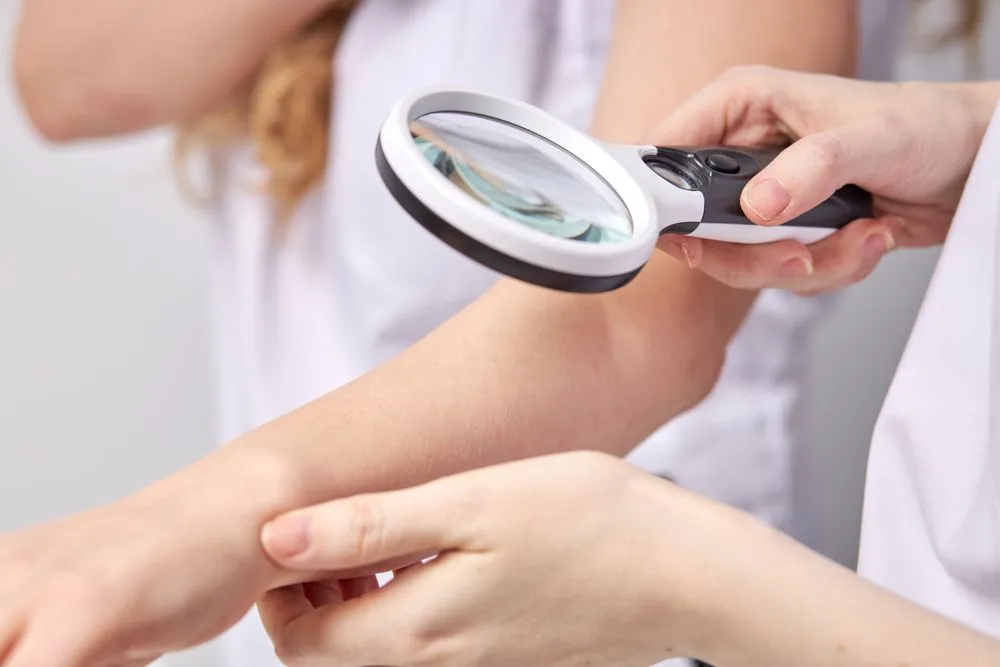
Benefits of Dermatological PCR Testing for Medical Providers
1. High Sensitivity and Specificity
Accurate Detection: Dermatological PCR testing offers high sensitivity and specificity, with studies showing sensitivity rates of 90-98% and specificity rates of 95-99% for detecting dermatological pathogens, ensuring accurate diagnosis and reducing the likelihood of false results.
2. Rapid Turnaround Time
Timely Diagnosis: PCR tests can provide results within hours compared to 24-48 hours or longer for traditional culture methods. This allows for prompt diagnosis and early initiation of appropriate treatment, which is crucial for managing dermatological infections and preventing complications.

3. Broad Pathogen Detection
Comprehensive Panels: Multiplex PCR panels can simultaneously detect multiple dermatological pathogens from a single sample, including bacteria, viruses, and fungi. This streamlines the diagnostic process and provides a comprehensive understanding of the infection.

4. Identification of Difficult-to-Culture Pathogens
Expanded Diagnostic Capabilities: PCR can identify pathogens that are challenging or impossible to culture, such as certain fastidious bacteria and viruses, enhancing diagnostic accuracy.

5. Differentiation Between Pathogens with Similar Symptoms
Targeted Treatment: PCR can differentiate between various pathogens that cause similar clinical symptoms, such as distinguishing between different viral and bacterial skin infections. This precision aids in selecting the most appropriate and effective treatments.

6. Quantification of Pathogen Load
Infection Severity Assessment: Quantitative PCR (qPCR) can measure the amount of pathogen DNA present, providing insights into the severity of the infection and helping monitor the response to treatment.

7. Detection of Antimicrobial Resistance Genes
Guided Antimicrobial Therapy: PCR can identify genetic markers of antimicrobial resistance, enabling providers to choose the most effective antibiotics and reducing the risk of treatment failure.

8. Non-Invasive and Minimally Invasive Sampling
Patient Comfort: Many dermatological PCR tests can be performed on non-invasive or minimally invasive samples, such as skin swabs or scrapings, making the testing process more comfortable for patients and easier for healthcare providers to perform.

9. Improved Infection Control
Reduced Transmission: Rapid PCR testing for dermatological infections helps in quickly identifying and treating infections, reducing the risk of transmission, particularly in healthcare settings.

10. Support for Epidemiological Surveillance
Public Health Insights: PCR testing provides valuable data for epidemiological tracking and monitoring of dermatological infection prevalence, helping inform public health responses and interventions.

11. Facilitation of Early Outbreak Detection and Response
Proactive Management: Early detection through PCR testing can lead to quicker public health responses, reducing the duration and spread of dermatological infection outbreaks. For example, early detection of methicillin-resistant Staphylococcus aureus (MRSA) has been crucial in controlling its spread in healthcare settings.

12. Enhanced Patient Management and Outcomes
Optimized Care: Accurate and rapid PCR diagnostics improve patient outcomes by facilitating timely and appropriate treatment, reducing the risk of complications, and improving recovery rates.

By integrating dermatological PCR testing into their diagnostic protocols, medical providers can significantly enhance their ability to accurately diagnose, treat, and manage skin infections, ultimately improving patient care and public health outcomes.
Sources:
- Veraldi, S., Molle, C., and Milani, R. (2014). Accuracy of polymerase chain reaction in the diagnosis of dermatophytosis. Dermatology Reports.
- Gupta, A. K., Nakrieko, K. A. (2009). Molecular methods in dermatology: Current applications and future prospects. Journal of Cutaneous Medicine and Surgery.
- Leung, A. K., Barankin, B., Leong, K. F. (2015). Viral infections of the skin: an update. Recent Patents on Inflammation & Allergy Drug Discovery.
- Procop, G. W., Koneman, E. W. (2007). Koneman's Color Atlas and Textbook of Diagnostic Microbiology. Lippincott Williams & Wilkins.
- Kondo, Y., et al. (2016). Multiplex PCR for the rapid detection of dermatophyte species causing superficial dermatophytosis. Journal of Dermatological Science.
- De Hoog, G. S., Guarro, J., Gene, J., et al. (2015). Atlas of Clinical Fungi. CBS-KNAW Fungal Biodiversity Centre.
- Becker, K., Heilmann, C., Peters, G. (2014). Coagulase-negative staphylococci. Clinical Microbiology Reviews.
- Hinrikson, H. P., Hurst, S. F., Lott, T. J., et al. (2005). Use of rapid polymerase chain reaction-based screening assay for the detection of medically important fungi. Diagnostic Microbiology and Infectious Disease.
- Bhatta, R., Keyal, U., Liu, Y., et al. (2014). Bacterial diversity in chronic wounds: the role of high throughput DNA sequencing. Journal of Wound Care.
- Green, J., Hay, R. J. (2013). Infectious diseases of the skin. Current Opinion in Infectious Diseases.
- Gerami, P., Busam, K. J. (2014). Clinical and Laboratory Investigation of Dermatoses. Pathology Patterns Reviews.
- Caliskan, E., Turkmen, M., Ozyurt, M., et al. (2016). Molecular characterization of bacterial pathogens in chronic wounds using broad-range 16S rDNA PCR and sequencing. Journal of Infection and Public Health.
- Tacconelli, E., Tumbarello, M., Bertagnolio, S., et al. (2003). Multidrug-resistant Staphylococcus aureus infections: epidemiology and clinical management. Infection.
- Doughty, P., Kral, A., Campbell, R. (2011). New developments in the use of molecular diagnostic techniques in dermatology. Clinics in Dermatology.
- Friedlander, S. F., Eichenfield, L. F., Fowler, J. F., et al. (2013). Diagnosis and management of skin and soft tissue infections. Pediatrics.